
Kennedy Space Center - A Pilgrimage
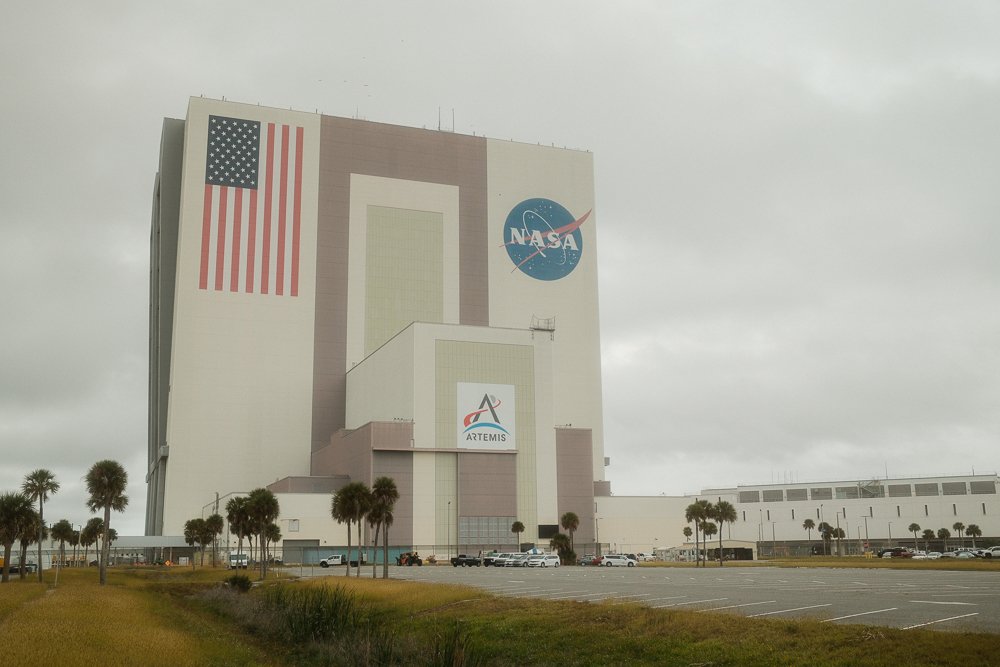
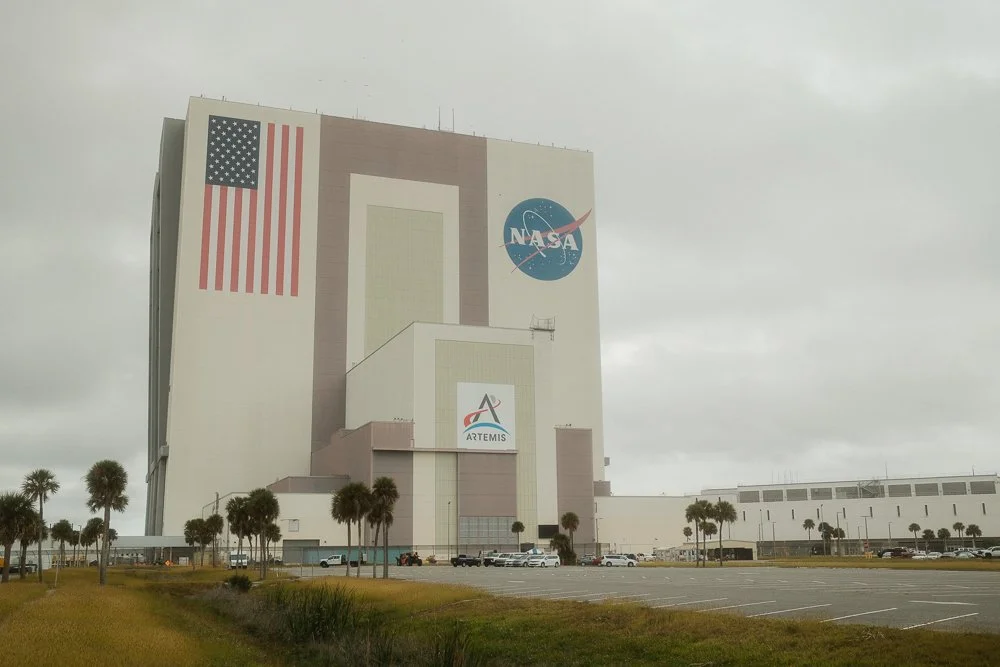
The Vehicle Assembly Building at the Kennedy Space Center, Cape Canaveral. © Robert Lyons 2026
If you love space — and I suspect you do, or you wouldn't be reading this — then Kennedy Space Center is not merely a tourist destination. It's a pilgrimage site. I made that pilgrimage last December, and I came home changed.
I arrived at KSC carrying a particular kind of anticipation, knowing that Artemis II, the mission that would carry Canadian astronaut Jeremy Hansen around the Moon, was on the horizon. Walking those grounds in the months before such a historic launch made everything feel charged with meaning. Kennedy Space Center isn't a museum or amusement park like the rest of nearby Orlando; it is a working spaceport, counting down.
Atlantis
The centrepiece of any KSC visit is the Space Shuttle Atlantis display, and it earns every superlative. The orbiter is suspended mid-roll, payload bay open, as if caught in the act of deploying a satellite. And there, extended proudly from her bay, is the Canadarm. Seeing it in person, attached to our shuttle, gave me a quiet swell of national pride I wasn't entirely prepared for. On the day I visited, the exhibit floor beneath Atlantis was unusually empty, which gave my daughter a moment I'll never forget: she danced beneath the shuttle. Freely, joyfully, in the great cathedral of spaceflight. I doubt either of us will forget that.
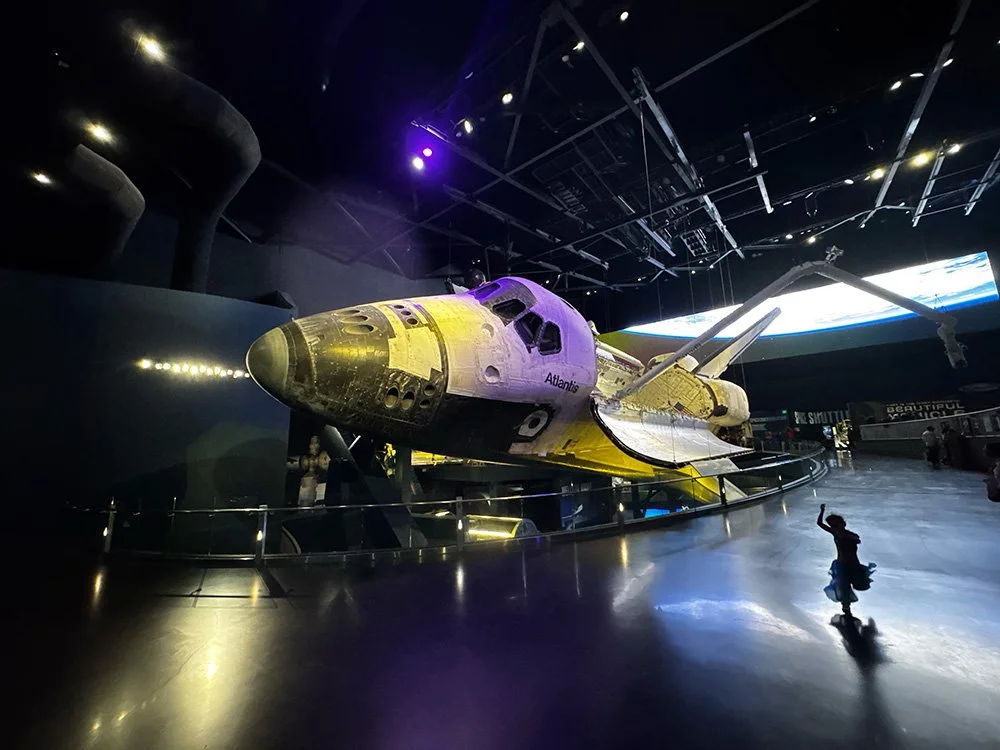
Dancing with Atlantis. © Robert Lyons 2026
The Hubble Space Telescope replica nearby was another highlight. It's a full-scale mockup that gives you a genuine sense of just how large and intricate the telescope is. After decades of seeing Hubble images, standing next to its physical dimensions is quietly astonishing.
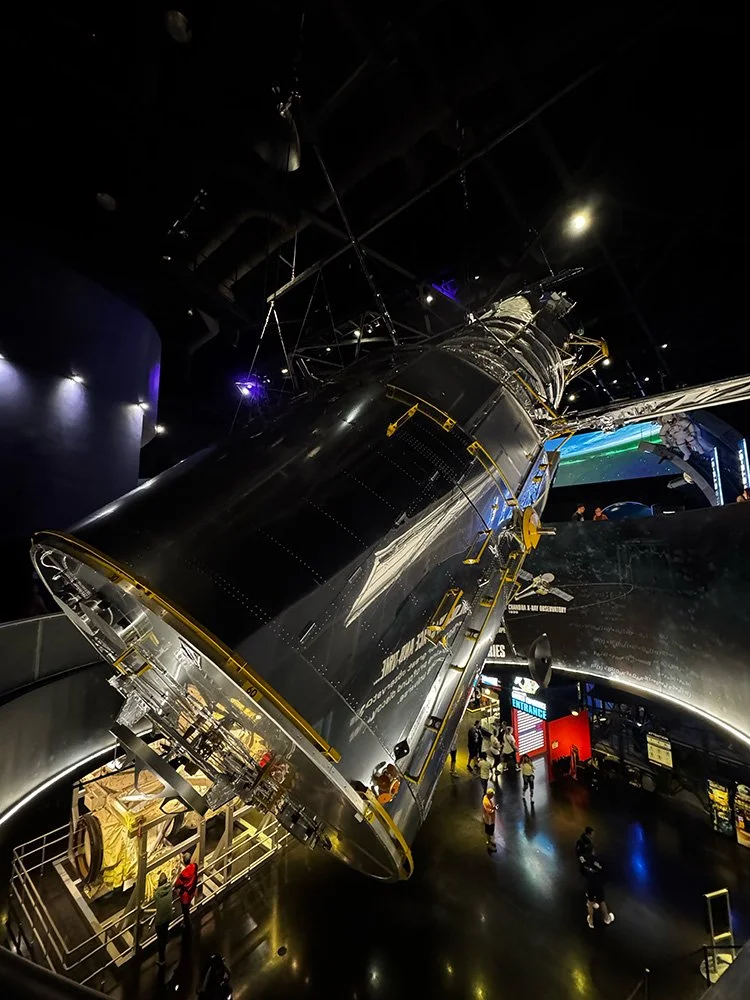
Hubble Space Telescope Replica, KSC. © Robert Lyons
Apollo and the Rooms Where History Was Made
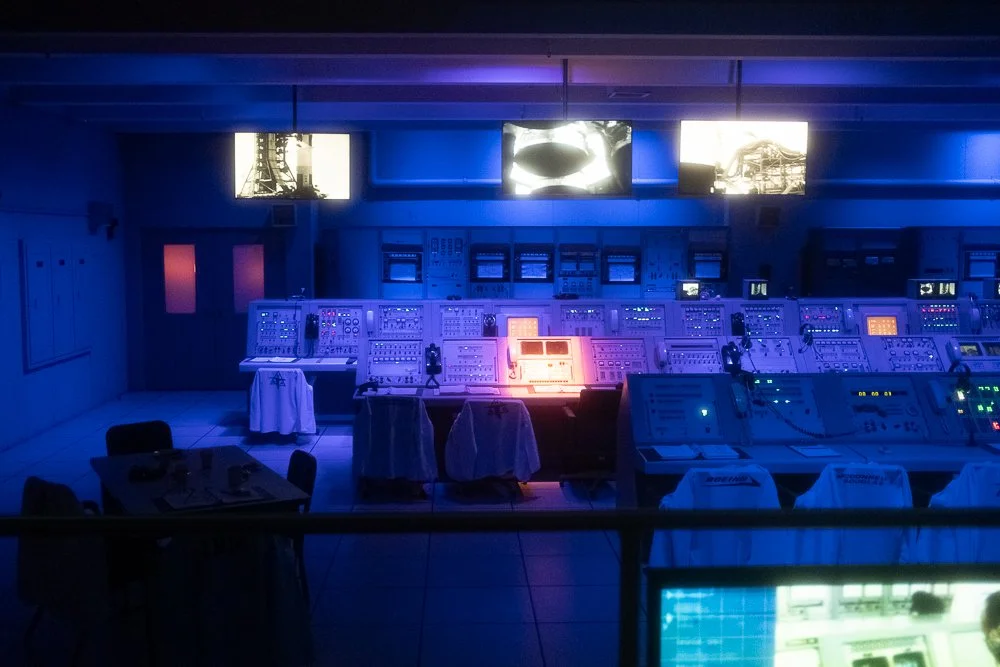
Apollo 11 Mission Control. © Robert Lyons 2026.
The recreation of the Apollo 11 Mission Control room is one of those experiences that stops you cold. The banks of consoles, the ashtrays, the wall screens: it's all there, painstakingly reconstructed. Standing in that room, you feel the weight of July 1969. You understand, viscerally, that real human beings sat in those chairs and navigated a spacecraft to the Moon using technology less powerful than the phone in your pocket. The room is both humbling and galvanizing. I photographed it extensively because the retro aesthetic and the nostalgia I felt were incredible. Maybe my favourite part of the day... maybe.
Among the Apollo artifacts on display is the Apollo 14 command module, Kitty Hawk, which carried Alan Shepard, Stuart Roosa, and Edgar Mitchell around the Moon and back. There's something profound about standing inches from a capsule that was 250,000 miles from Earth, a small metal shell between three human beings and the void. How they lived in something that small for 9 days with no washroom is beyond me!
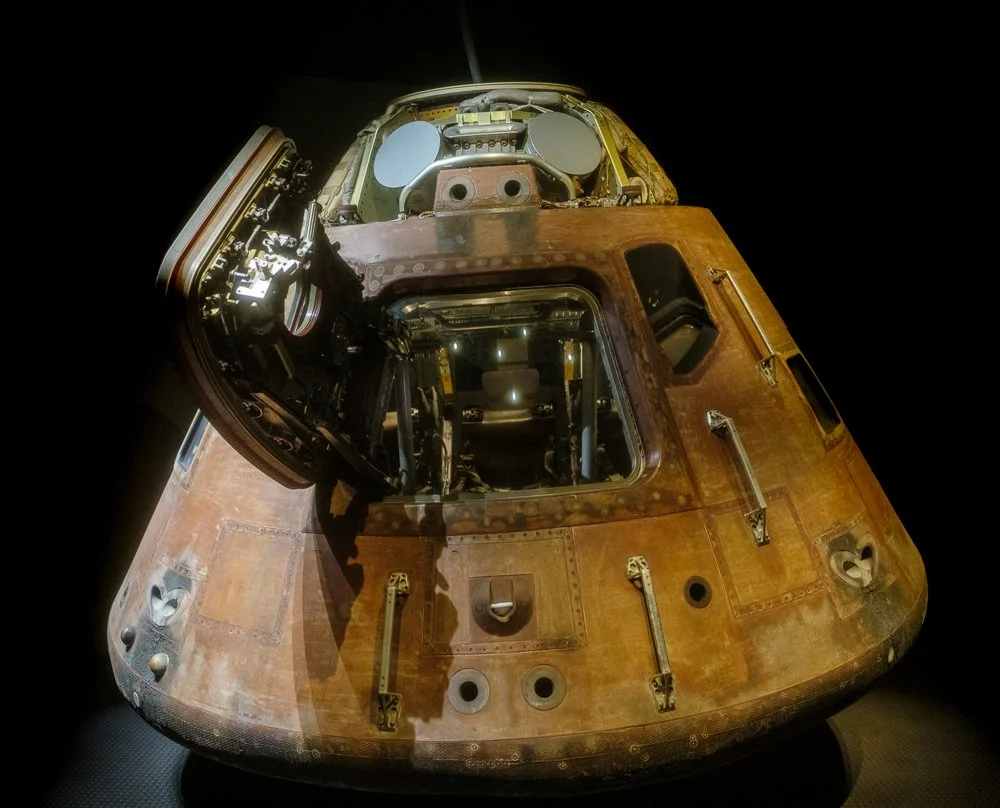
Kitty Hawk, Apollo 14 Command Module. © Robert Lyons 2026.
The Industrial Scale of It All
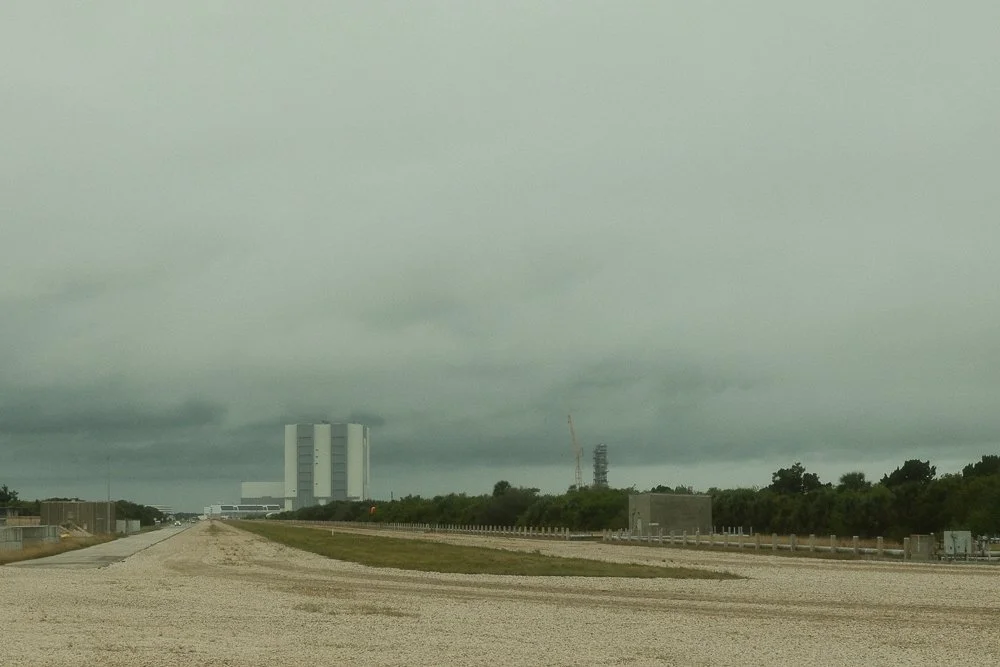
No visit to KSC is complete without grasping its sheer physical scale. The Vehicle Assembly Building is one of the largest structures by volume on Earth, and when you stand at its base, you feel appropriately small. The crawler-transporter roadway, or the crawlerway, stretches toward the launch pads like a stone river, wide enough for two of the massive machines to pass each other. It's engineering at a geological scale.
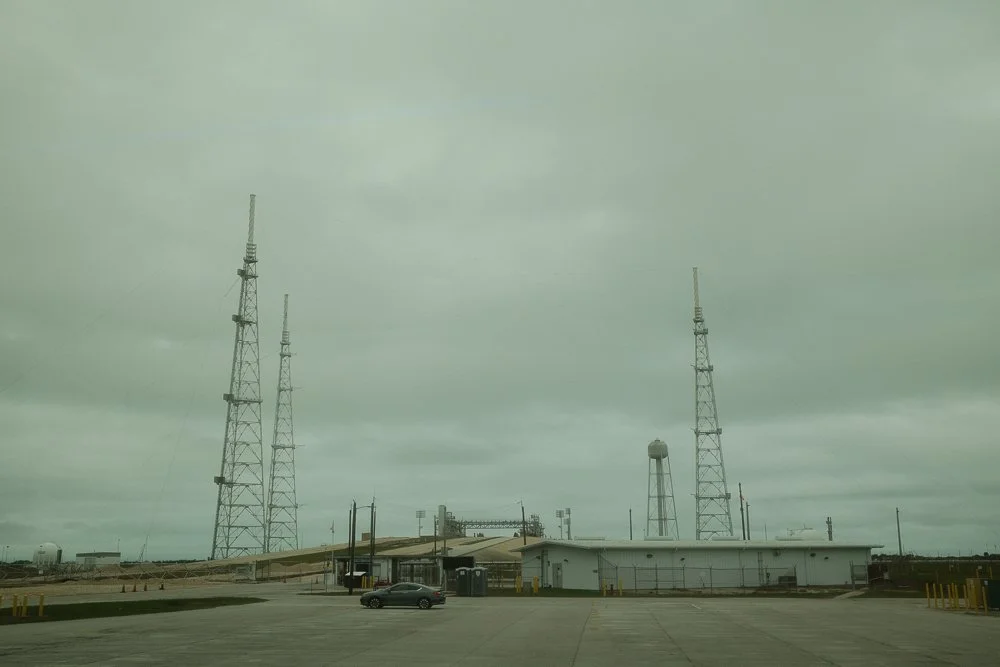
Most visitors don't know about the camera bunkers, but they're worth seeking out: hardened pillboxes positioned close to the launch pads to capture rocket ignition at point-blank range. The cameras inside them are essentially sacrificial, bathed in flame and acoustic energy at every launch. The images they produce are worth it. As a photographer, I was really interested in what most people probably see as a pretty mundane object, but to me, they were every bit as interesting as the spacecraft.
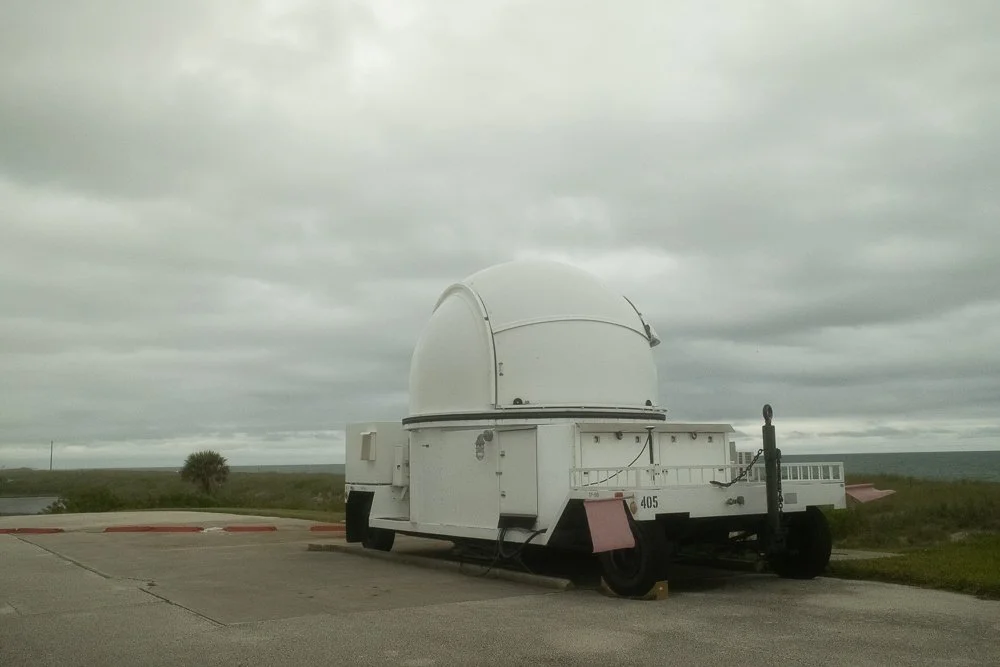
Remote Camera at Launch Complex 39B. © Robert Lyons 2026.
An Unexpected Highlight: Mike Foreman
One of my most memorable moments came unexpectedly when I had the chance to meet astronaut Mike Foreman, a veteran of two shuttle missions. We fell into easy conversation, and I found myself sharing stories from my recent encounter with Chris Hadfield, tales of a fellow Canadian who had captivated the world from the ISS. Foreman lit up. There's a warmth and camaraderie among people who have dedicated their lives to this work that is immediately apparent. They were old Navy test pilots together, and Mike mentioned that he actually used Chris' gloves on his spacewalks. He even noted that he used them five times, while Chris only used them twice. That is an astronaut flex!
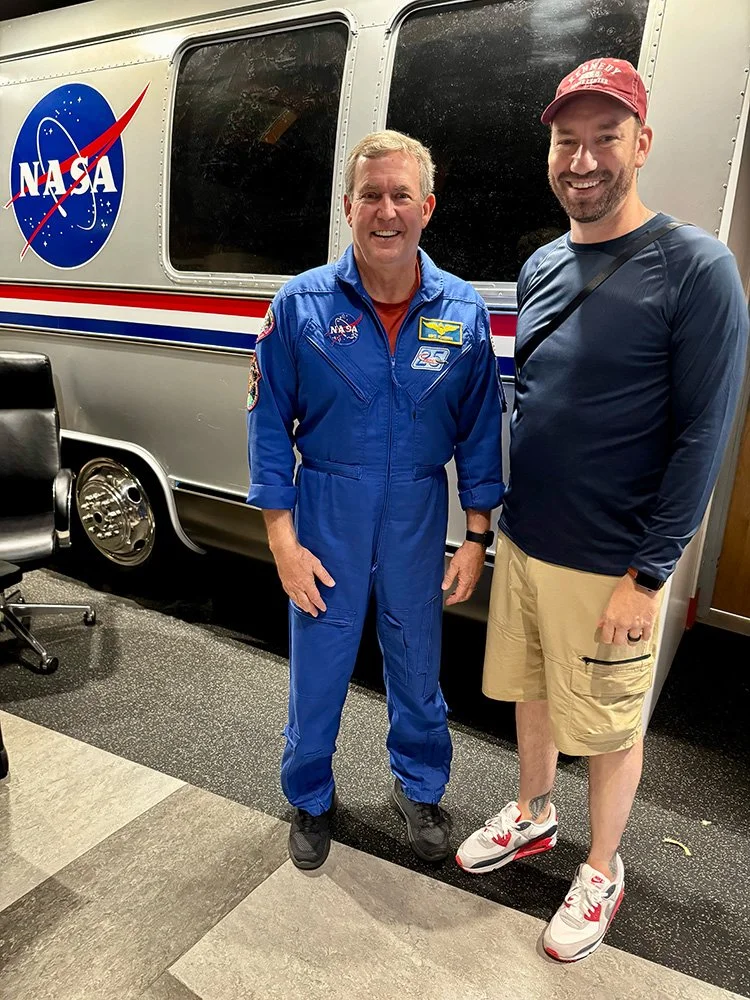
Rob Lyons and astronaut Mike Foreman.
Why You Should Go
I visited in December 2025, just months before Artemis II carried Jeremy Hansen on a trajectory around the Moon, the first Canadian to leave Earth orbit. Walking the same ground where that mission had been prepared gave me a feeling of genuine connection to it. And when that rocket finally rose, I felt, in some small way, that I had been there.
That's the gift KSC gives you. It transforms spaceflight from something you watch on a screen into something you have touched, smelled, and stood inside. It makes the abstract personal.
Go. Make the pilgrimage. You won't regret it.